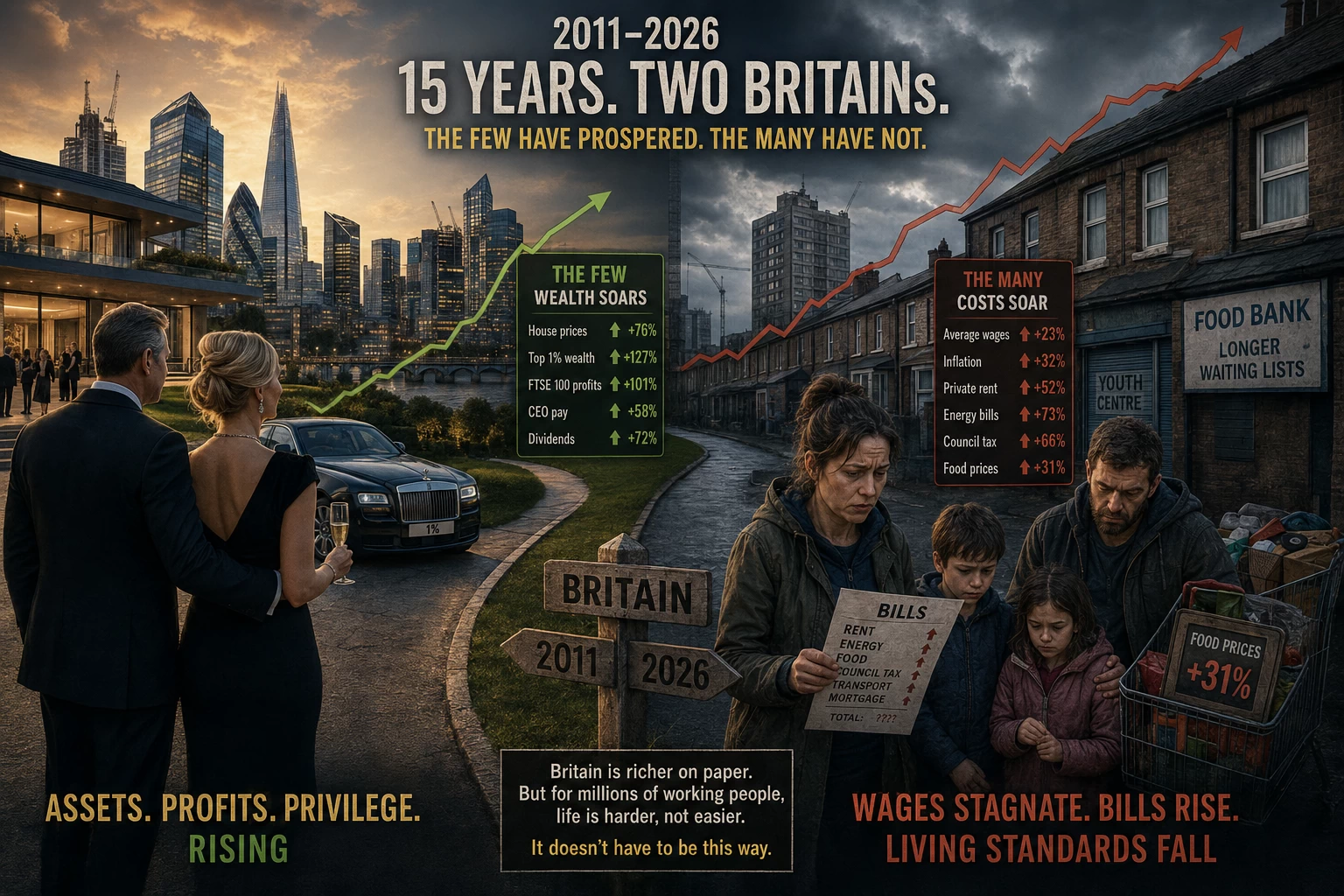
For much of the last forty years, British politics has been dominated by one economic idea: if those at the top become wealthier, everyone else will eventually benefit.
Many working people no longer believe that promise.
Whether they vote Labour, Conservative, Reform, Green or not at all, millions feel they work harder than ever while finding it increasingly difficult to afford housing, childcare, transport and even food.
Here are five areas where any Burnham government would need to act quickly if it wanted to improve everyday life for ordinary families.
1. Build Affordable Homes on a Scale Britain Hasn’t Seen for Decades
Housing now dominates household finances.
Young people increasingly find themselves unable to buy.
Private rents continue consuming a growing share of wages.
Many families spend years on council waiting lists.
A Burnham government would need a major programme of:
- Council house building
- Affordable social housing
- Brownfield redevelopment
- Protection against excessive rent increases
- Faster planning for genuinely affordable homes
Housing should once again become somewhere to live rather than primarily an investment vehicle.
2. Make Work Pay Again
Britain has experienced years of weak wage growth while living costs have risen sharply.
Improving living standards means more than increasing the National Living Wage.
A future government should consider:
- Stronger collective bargaining
- Ending exploitative zero-hours contracts
- Better sick pay
- Fairer employment rights from day one
- Tackling insecure gig-economy work
Economic growth means little if workers see little benefit.
3. Bring Public Services Back to Life
Years of pressure on public services have affected nearly everyone.
Whether it’s:
- NHS waiting lists
- Local councils
- Social care
- GP appointments
- Public transport
many people feel they receive less despite paying more.
Investment should focus on rebuilding services rather than continually outsourcing them where evidence suggests outcomes have not consistently improved.
Efficient public services are not merely a cost—they are part of the nation’s economic infrastructure.
4. Reform the Tax System So Work Is Rewarded
Many workers question why earned income can be taxed more heavily than wealth derived from assets.
A broader review could include:
- Closing major tax avoidance loopholes
- Simplifying taxation
- Reviewing taxation of extreme wealth
- Supporting lower and middle earners
- Encouraging productive investment over speculation
The objective should be fairness rather than punishment.
Most people are willing to pay tax if they believe everyone is contributing fairly.
5. Invest Outside London
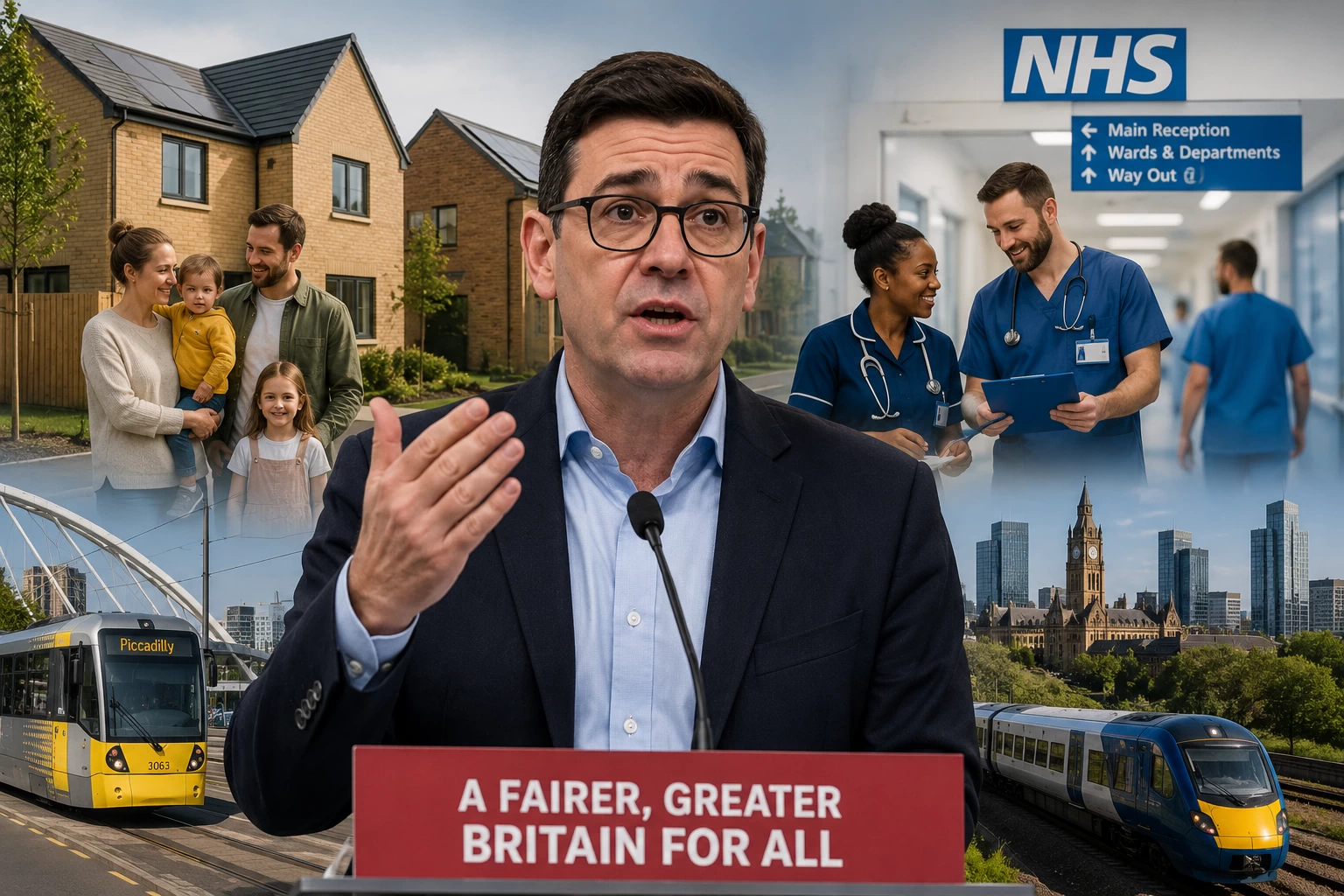
One of Andy Burnham’s strongest political messages has long been that Britain is too centralised.
For decades, London has attracted disproportionate investment while many northern and regional communities have struggled.
Greater devolution could allow regions to make more decisions locally on:
- Transport
- Housing
- Skills
- Economic development
- Infrastructure
Communities generally understand their own priorities better than Whitehall.
A stronger regional economy would also reduce pressure on London while creating opportunities across the country.
Politics Needs Hope Again
Perhaps the biggest challenge facing any future government is not economic but psychological.
Trust in politics has fallen dramatically.
Many voters feel governments make promises during elections only to abandon them afterwards.
Andy Burnham’s appeal to many supporters lies partly in his reputation for speaking directly and focusing on practical problems rather than ideological battles.
Whether that reputation would survive the realities of governing is another question entirely.
Running Greater Manchester is very different from running the United Kingdom.
But many voters increasingly appear willing to consider a different style of politics—one that focuses less on Westminster theatre and more on improving daily life.
Ultimately, success would not be judged by speeches or headlines.
It would be judged by simple questions:
Can people afford a decent home?
Can they see a doctor?
Can they get to work reliably?
Can they raise a family without constant financial anxiety?
If the answer to those questions becomes “yes” for more people, any government—regardless of political colour—will have achieved something worthwhile.
Conclusion
Britain faces profound economic and social challenges, but they are not insurmountable. A government led by Andy Burnham would face high expectations from those looking for a more decentralised, interventionist approach to government. Whether through expanding affordable housing, improving workers’ rights, revitalising public services, reforming taxation or empowering the regions, the central test would be the same: does policy measurably improve the lives of ordinary working people?
For many voters, that practical measure matters more than political slogans.
▶ Listen to this article Audio narration from The News Today.eu Your browser does not support audio playback. For more than four
More▶ Listen to this article Audio narration from The News Today.eu Your browser does not support audio playback. A Black barrister arriving
MoreFor thousands of years, humanity has divided itself into tribes. By nationality. By race. By language. By class. By territory. But perhaps

More▶ Listen to this article Audio narration from The News Today.eu Your browser does not support audio playback. Every species has its

MoreFor most of my adult life I have been a Labour voter and a member of the Labour Party. That wasn’t simply
More▶ Listen to this article Audio narration from The News Today.eu Your browser does not support audio playback. 1 Is Racism Becoming
MoreIntroduction For much of the past four decades, Britain’s economy has been built around the idea that if those at the top
MoreWhen Andy Burnham walked into Downing Street, he inherited more than an economy under pressure, overstretched public services and a divided country.
MoreWealth Inequality Has Widened Since 2010, Britain has seen the number of billionaires rise from around 50 to well over 150, while
More▶ Listen to this article Audio narration from The News Today.eu Your browser does not support audio playback. Will Andy Burnham’s Latest
More