

Lena Hart: The Rise of the Virtual Music Artist
The music industry has always embraced new technology. Electric guitars transformed rock, synthesizers reshaped pop, and streaming revolutionised how people discover new artists. Today, another change is taking place: the emergence of entirely virtual performers.
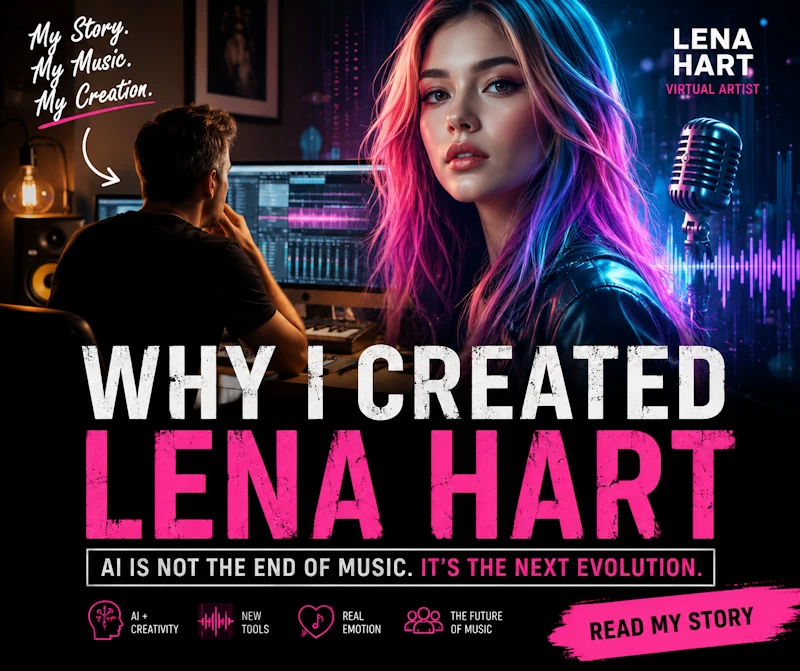
One example is Lena Hart, a digital music artist whose songs, videos and online presence are created using modern artificial intelligence and digital production techniques rather than traditional recording methods.
Her work raises an interesting question: does it matter whether the performer behind the music is real?
For some listeners the answer is no. For others, authenticity remains everything.
Readers can listen to two of Lena Hart’s songs directly on this page by selecting either of the below players. The mp3 can also be freely downloaded to your device.
What Is a Virtual Artist?
Unlike a traditional singer, a virtual artist is created using a combination of technologies including:
- AI-assisted songwriting
- AI-generated or digitally enhanced vocals
- Digital artwork
- Computer-generated videos
- Human creative direction
Rather than replacing creativity, many creators argue that AI simply provides another set of artistic tools.
The finished product is judged in exactly the same way as any other song:
Does it move people?
The Arguments In Favour
Supporters believe virtual artists open music to far more people.
Creativity becomes accessible
Many talented writers cannot sing professionally.
Others cannot afford expensive studios or session musicians.
Modern AI tools allow those ideas to become finished songs.
Independent artists can compete
For decades major record labels controlled production, marketing and distribution.
Today a single creator can produce music, artwork and videos from a home computer.
That dramatically lowers the barrier to entry.
New forms of storytelling
A virtual performer never ages, never tours and can appear in entirely fictional worlds.
That allows artists to build characters and stories impossible in traditional music.
Lena Hart is presented as more than simply a singer—she represents an entire creative universe built around her music.
Technology has always changed music
Critics once claimed:
- Drum machines weren’t “real”.
- Synthesizers weren’t “real”.
- Auto-Tune wasn’t “real”.
Yet all three are now common throughout modern music.
Supporters argue AI is simply the next stage in that evolution.
The Arguments Against
Not everyone is convinced.
Many musicians believe AI risks reducing the value of genuine human performance.
Authenticity
Fans often connect emotionally with artists because they know their life story.
Heartbreak, joy and struggle become part of the music.
A virtual performer cannot literally experience those emotions.
Critics argue this creates a fundamental difference.
Employment
Professional singers, illustrators and musicians worry AI could reduce opportunities for human artists.
If companies can generate songs quickly and cheaply, some fear investment in emerging musicians could decline.
Copyright
AI systems are trained using enormous quantities of existing material.
Questions remain over:
- copyright
- ownership
- licensing
- artistic attribution
Governments around the world are still debating how these issues should be regulated.
Transparency
Some listeners simply want to know whether a song has been created by a human performer or by AI.
Many believe creators should clearly explain how much artificial intelligence has been used.
Does the Audience Care?
Perhaps the biggest argument in favour of virtual artists is also the simplest.
Most listeners ultimately judge music by asking:
“Do I enjoy listening to it?”
If the answer is yes, they may care little whether the voice came from a recording studio or an AI-assisted production pipeline.
Others remain convinced that human experience is impossible to reproduce digitally.
The debate is unlikely to disappear anytime soon.
My View
Technology has always changed the creative industries, and history suggests innovation rarely stops because people object to it.
Virtual artists like Lena Hart are unlikely to replace human performers entirely. Instead, they may become another genre alongside traditional musicians.
The real challenge is ensuring that AI is used ethically—respecting copyright, remaining transparent about how works are created, and allowing human artists to continue to thrive.
In the end, audiences will decide. If the music connects emotionally, many listeners may be happy to embrace both human and virtual performers. Others will always prefer artists whose songs are rooted in lived experience.
The future of music may not be a choice between humans and AI, but a landscape where both exist side by side.
Watch Lena Hart
You can listen above in this article to two of Lena Hart’s songs and even download them if you wish, or view the latest videos and judge for yourself by visiting:
Lena Hart Official YouTube Channel
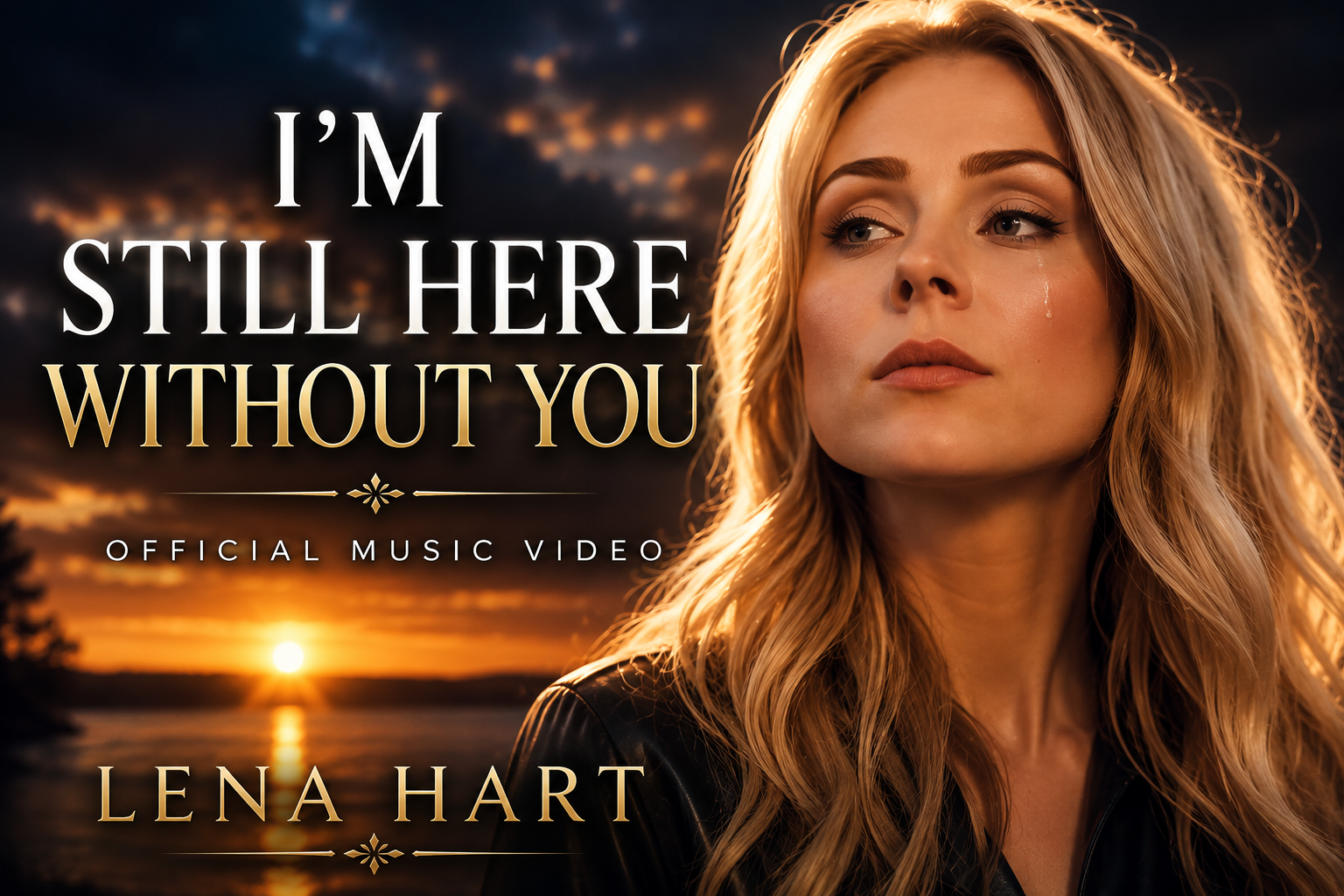
The central image below will take you straight to a Lena Hart video. I hope you enjoy her music.
▶ Listen to this article Audio narration from The News Today.eu Your browser does not support audio playback. For more than four
More▶ Listen to this article Audio narration from The News Today.eu Your browser does not support audio playback. A Black barrister arriving
MoreFor thousands of years, humanity has divided itself into tribes. By nationality. By race. By language. By class. By territory. But perhaps
More▶ Listen to this article Audio narration from The News Today.eu Your browser does not support audio playback. Every species has its
MoreFor most of my adult life I have been a Labour voter and a member of the Labour Party. That wasn’t simply
More▶ Listen to this article Audio narration from The News Today.eu Your browser does not support audio playback. 1 Is Racism Becoming
MoreIntroduction For much of the past four decades, Britain’s economy has been built around the idea that if those at the top
MoreWhen Andy Burnham walked into Downing Street, he inherited more than an economy under pressure, overstretched public services and a divided country.
MoreWealth Inequality Has Widened Since 2010, Britain has seen the number of billionaires rise from around 50 to well over 150, while
More▶ Listen to this article Audio narration from The News Today.eu Your browser does not support audio playback. Will Andy Burnham’s Latest
More