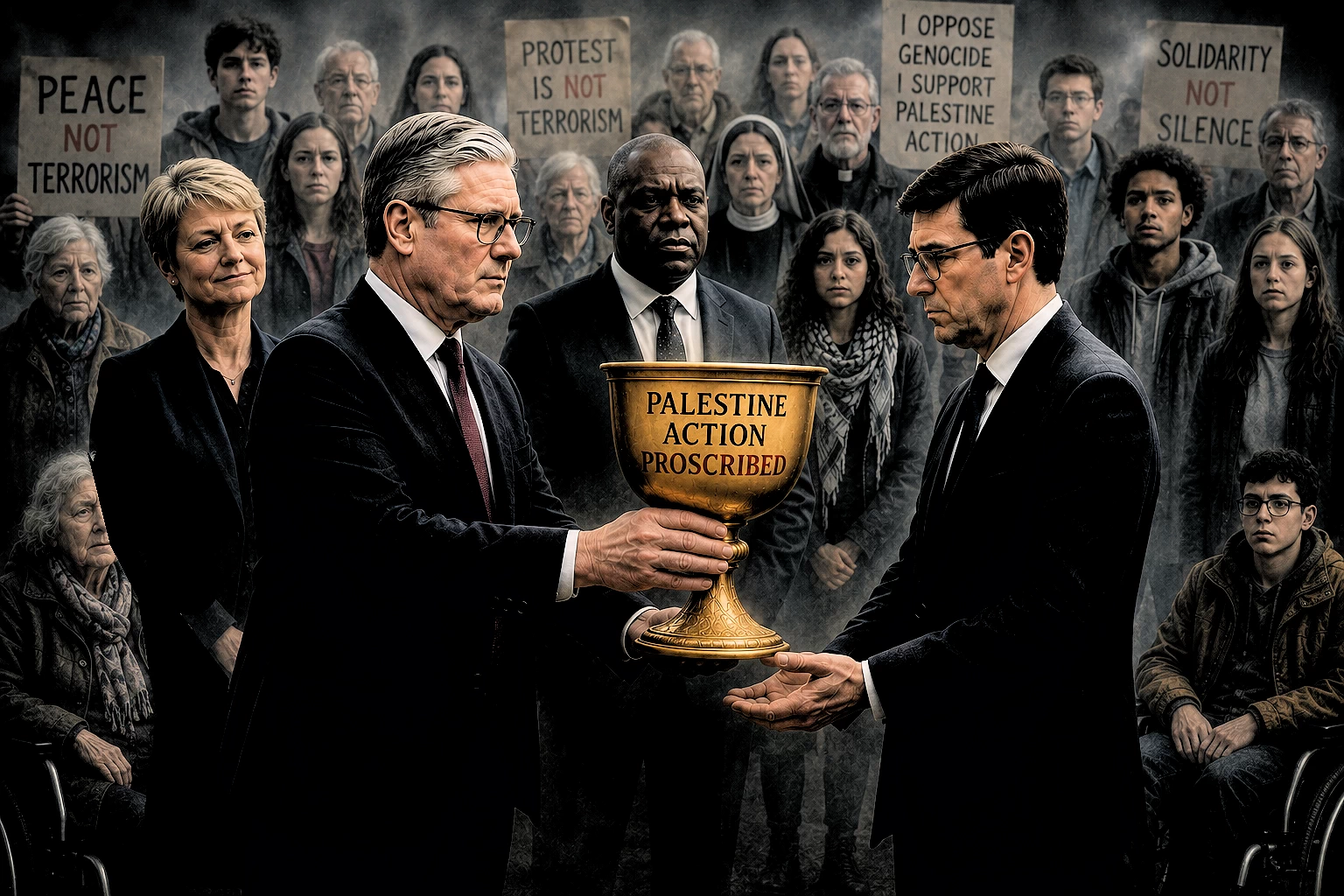
When Andy Burnham walked into Downing Street, he inherited more than an economy under pressure, overstretched public services and a divided country. He also inherited one of the most politically and morally difficult legacies of the previous government: the decision to proscribe Palestine Action as a terrorist organisation.
Whether people agreed or disagreed with that decision when it was taken, the consequences have become impossible to ignore.
More than 3,000 people have now been arrested under legislation linked to support for the organisation, with many accused of offences under Section 12 of the Terrorism Act 2000. In some cases, the alleged conduct has involved public statements or placards expressing support for Palestine Action. The maximum penalty for certain offences is up to 14 years’ imprisonment, although any sentence ultimately depends on the specific facts of each case and court decisions.
Many of those arrested are not the sort of people most Britons associate with terrorism.
Among them are pensioners, teachers, clergy, environmental campaigners, students and other citizens who regard themselves as engaging in political protest rather than supporting terrorism. The Supreme Court has now agreed to hear a legal challenge to the proscription itself, meaning the lawfulness of the ban remains under judicial scrutiny.
A Political Time Bomb
This is the poisoned chalice Sir Keir Starmer has handed to Andy Burnham.
If Burnham allows prosecutions to continue unchanged, his government risks becoming identified with one of the largest crackdowns on political protest in modern British history.
If he intervenes too aggressively, opponents will accuse him of weakening Britain’s counter-terrorism laws.
Neither option is politically comfortable.
Yet leadership is often measured by the willingness to confront inherited problems rather than simply administer them.
The Real Question
This debate is no longer simply about Palestine Action.
It is about proportionality.
Most Britons would accept that deliberate criminal damage to military property should be investigated and prosecuted under the ordinary criminal law where evidence exists.
The far more controversial question is whether thousands of people should face terrorism prosecutions for expressions of support or protest that they believe are political speech.
The courts have upheld the legal framework for Section 12 in previous cases while emphasising that the offence applies only in specific circumstances and does not criminalise support for political aims alone. At the same time, the Supreme Court is preparing to hear the challenge to Palestine Action’s proscription, highlighting that important legal questions remain unresolved.
What Should Burnham Do?
A Burnham government could seek to reduce tensions without abandoning public safety.
It could:
- Pause non-violent prosecutions connected solely to expressions of support while the Supreme Court considers the legality of the proscription.
- Ask the Attorney General and Home Secretary to review whether existing prosecutions remain in the public interest.
- Establish an independent review of how terrorism legislation is being applied to political protest.
- Consider whether offences involving property damage should be prosecuted through existing criminal laws rather than automatically relying on terrorism legislation where appropriate.
- Invite Parliament to re-examine whether current legislation strikes the correct balance between national security and freedom of expression.
None of these measures would prevent the prosecution of genuine violence or criminal damage.
Instead, they would recognise that exceptional anti-terror powers should be used only where they are clearly necessary and proportionate.
Our View
Andy Burnham has repeatedly spoken about rebuilding trust between government and the public.
That task will be difficult if thousands of otherwise law-abiding citizens continue to face the prospect of terrorism prosecutions while the legality of the underlying proscription is still before the courts.
Governments should be firm against genuine terrorism. They should also be careful not to blur the line between violent extremism and political protest.
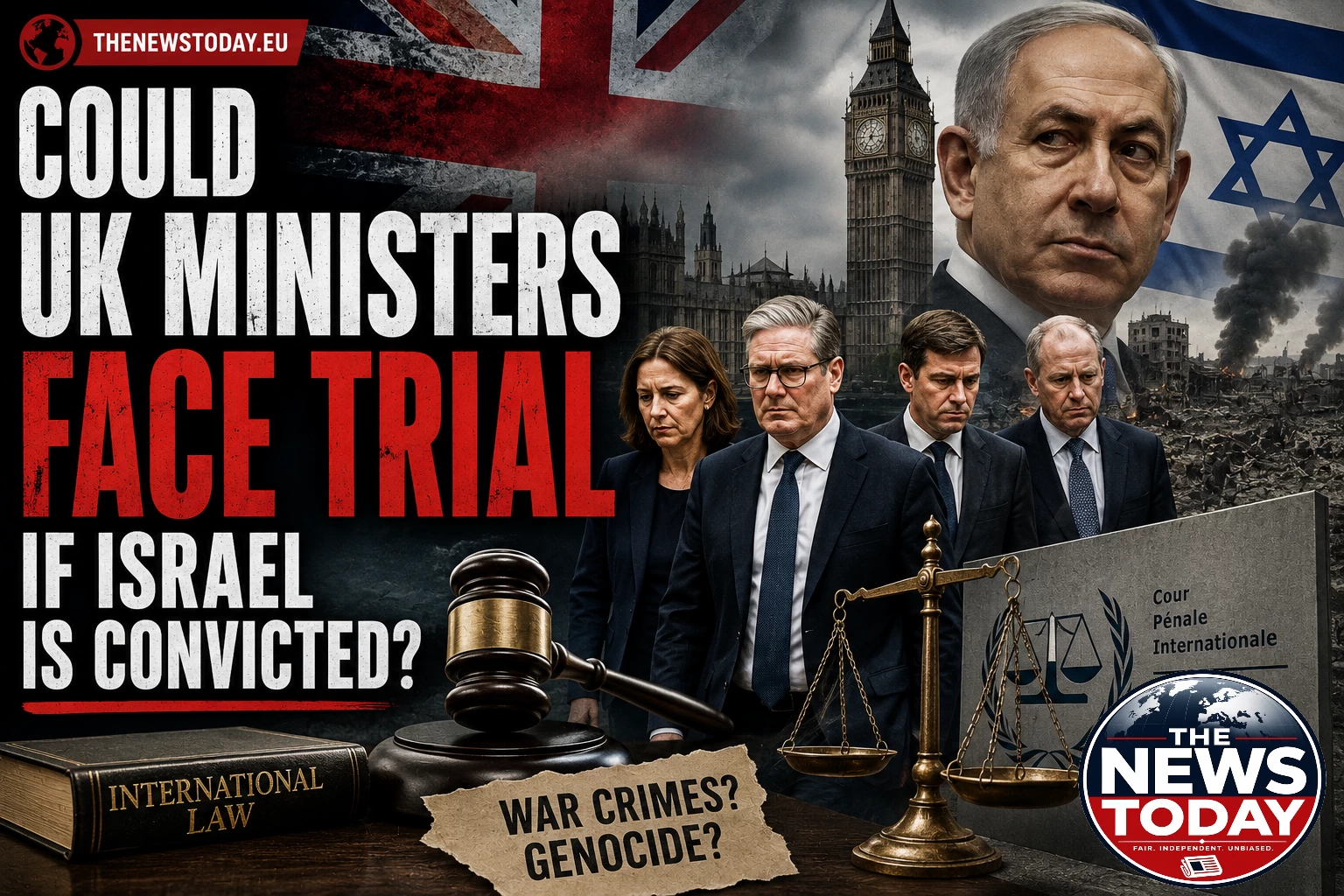
There is another reason why this issue may become even more significant. The International Court of Justice (ICJ) is hearing South Africa’s case alleging that Israel has breached the Genocide Convention, while the International Criminal Court (ICC) has separately issued arrest warrants for senior Israeli leaders over alleged war crimes and crimes against humanity. Should future international legal proceedings ultimately conclude that genocide was committed, questions could inevitably be asked about the conduct of governments that continued to provide political, diplomatic or military support during that period.
That would not automatically make foreign politicians criminally liable. However, it could lead to calls for investigations into whether ministers in countries supporting Israel complied with their obligations under international law. Critics have already argued that senior members of the former UK government—including Sir Keir Starmer, David Lammy and Yvette Cooper—could face scrutiny if future judicial findings established that they knowingly assisted actions later determined to amount to genocide. Whether any such proceedings could succeed would depend on the evidence, the findings of the relevant international courts and the legal tests for individual responsibility.
For Andy Burnham, this is why the Palestine Action issue is about more than protest legislation. It sits within a much wider international legal and moral debate that continues to evolve. A government committed to the rule of law should ensure that its domestic response is measured, proportionate and consistent with the principles of justice, while allowing the independent courts—both in Britain and internationally—to determine questions of criminal responsibility.
▶ Listen to this article Audio narration from The News Today.eu Your browser does not support audio playback. For more than four
More▶ Listen to this article Audio narration from The News Today.eu Your browser does not support audio playback. A Black barrister arriving
MoreFor thousands of years, humanity has divided itself into tribes. By nationality. By race. By language. By class. By territory. But perhaps
More▶ Listen to this article Audio narration from The News Today.eu Your browser does not support audio playback. Every species has its
MoreFor most of my adult life I have been a Labour voter and a member of the Labour Party. That wasn’t simply
More▶ Listen to this article Audio narration from The News Today.eu Your browser does not support audio playback. 1 Is Racism Becoming
MoreIntroduction For much of the past four decades, Britain’s economy has been built around the idea that if those at the top
MoreWhen Andy Burnham walked into Downing Street, he inherited more than an economy under pressure, overstretched public services and a divided country.
MoreWealth Inequality Has Widened Since 2010, Britain has seen the number of billionaires rise from around 50 to well over 150, while
More▶ Listen to this article Audio narration from The News Today.eu Your browser does not support audio playback. Will Andy Burnham’s Latest
More