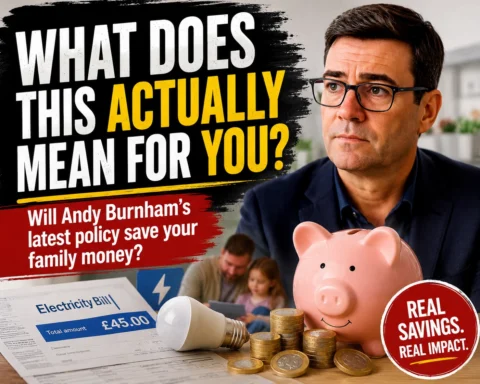
Introduction
For much of the past four decades, Britain’s economy has been built around the idea that if those at the top prosper, the benefits will eventually flow down to everyone else. Since the era of Margaret Thatcher, successive governments of different political colours have largely embraced policies that critics argue have favoured wealth creation at the very top—through privatisation, deregulation, lower taxes on capital, and an economic model that has often rewarded asset ownership more than hard work.
There is no denying that some people have become extraordinarily wealthy during that period. Britain has produced far more millionaires and billionaires than it had in the early 1980s, while many large companies have generated record profits. Yet for millions of ordinary families, the experience has been very different. Wages have often failed to keep pace with housing costs, household bills have climbed sharply, secure jobs have become harder to find, and many public services have struggled under years of financial pressure.
For many voters, the promise that prosperity would eventually “trickle down” has not delivered the improvements they expected in their everyday lives. Instead, Britain has become a country where wealth is increasingly concentrated in the hands of a relatively small minority while many working households feel they are working harder simply to stand still. For parents the expectation that their children will be better off than themselves has become a distant dream.
Supporters of Andy Burnham believe the country now has an opportunity to change direction. Rather than measuring success primarily by the fortunes of the wealthiest, they argue government should once again judge itself by whether working people can afford a decent home, raise a family, access quality healthcare, travel affordably and enjoy secure, well-paid employment.
The challenge facing Burnham is immense. But if he is serious about creating an economy that works for the many rather than the few, there are some priorities that simply cannot wait.
These are 10 things Andy Burnham needs to do as soon as possible if Britain is to become a country that works for the rest of us, not just those who have done well since the Thatcher era.
1. Cut Household Bills
- Freeze or reduce energy costs
- Reform the energy market
- Reduce standing charges
- Expand home insulation programmes
- Help low-income families first
Why it matters
Lower bills immediately increase disposable income.
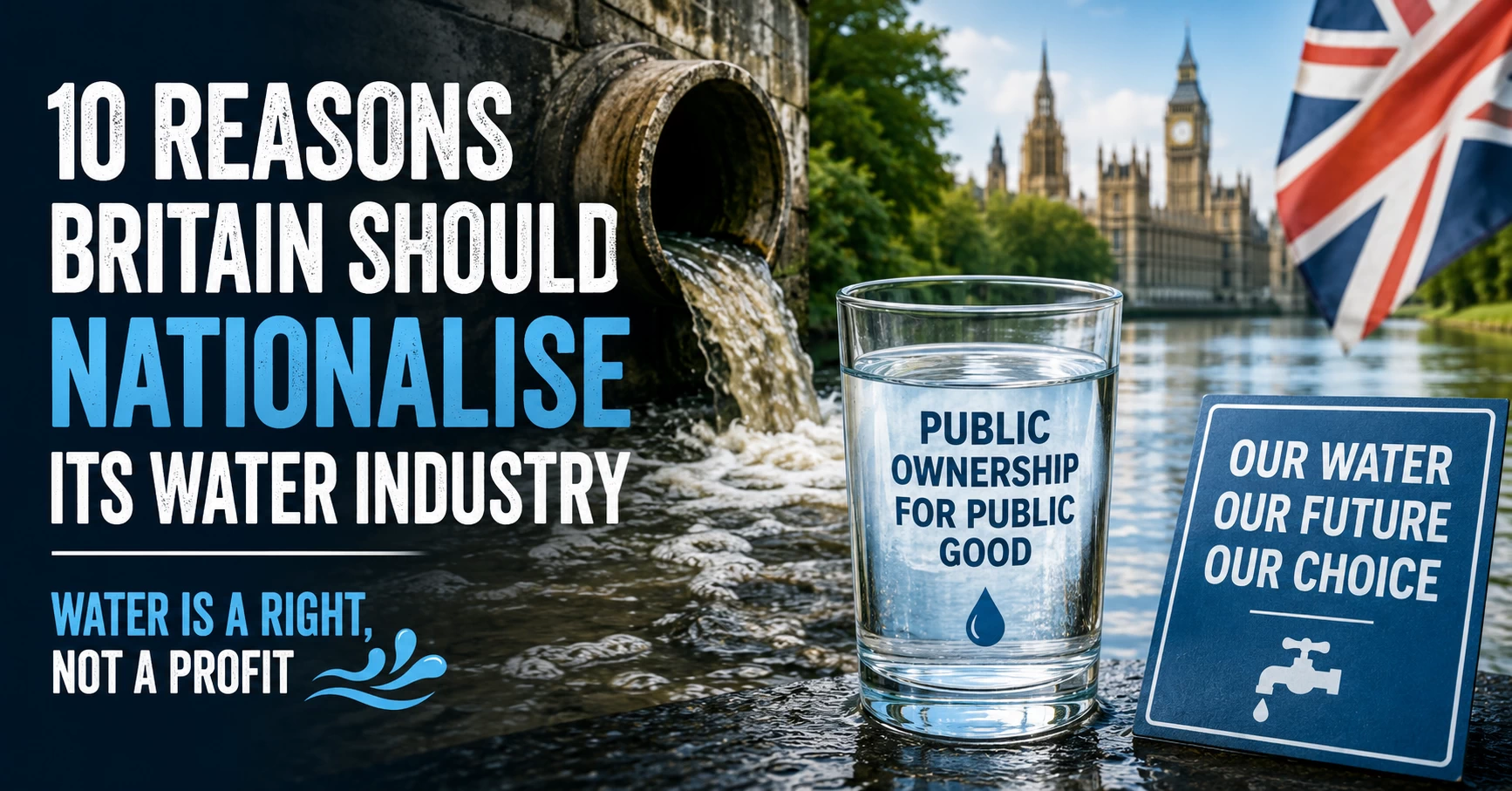
2. Bring Water Back Into Public Ownership
Cover:
- Record sewage discharges
- Rising bills
- Shareholder dividends
- Investment in infrastructure
- Why many European countries use public ownership
Why it matters
Water is an essential public service rather than a luxury.
3. Build Affordable Homes at Scale
Include:
- Social housing
- Affordable homes
- Planning reform
- Brownfield development
- First-time buyers
Why it matters
Housing shortages affect nearly every generation.
4. Put More Money Into Workers’ Pockets
Include:
- Stronger workers’ rights
- Fair pay agreements
- A Real Living wage
- Secure employment
- End exploitative contracts
Why it matters
Higher wages stimulate local economies.
5. Reform the NHS Before It Gets Worse
Include:
- GP access
- Waiting lists
- Social care
- Mental health
- Staff recruitment
Why it matters
Health affects every family.
6. Fix Britain’s Broken Transport System
Include:
- Rail reform
- Bus services
- Affordable fares
- Regional investment
- Integrated ticketing
Use Burnham’s Manchester experience.
Why it matters
Better transport boosts jobs and growth.
7. Make the Wealthiest Pay Their Fair Share
Discuss:
- Closing tax loopholes
- Fair taxation
- Tackling avoidance
- Tax Wealth The Same As Wages
- Windfall taxes where appropriate
- Investment into public services
Why it matters
Public services require sustainable funding.
8. Reverse the Decline in Public Services
Include:
- Local councils
- Libraries
- Youth centres
- Policing
- Community services
Why it matters
Communities function better when services are properly funded.
9. Invest in British Industry
Discuss:
- Manufacturing
- Green technology
- AI
- Apprenticeships
- Infrastructure
- Skills
Why it matters
Economic growth creates better-paid jobs.
10. Restore Trust in Politics
Include:
- Transparency
- Political donations
- Lobbying reform
- Ministerial standards
- Accountability
Why it matters
Confidence in government underpins democracy.
Our View
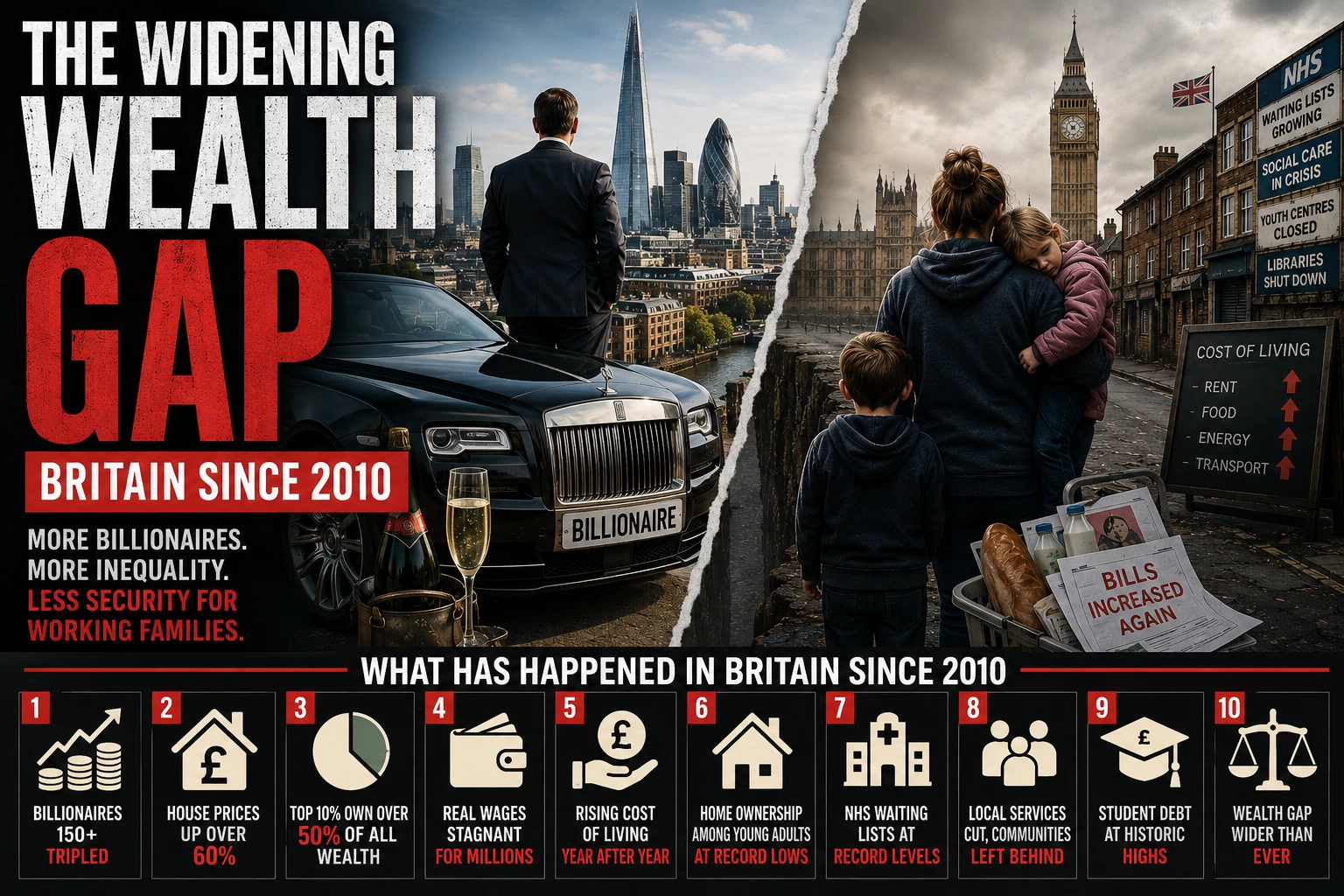
Britain has become a far more unequal country over the past decade. Wealth has become increasingly concentrated among those at the very top while many working households have faced rising costs, stagnant living standards and mounting pressure on public services.
Supporters of Andy Burnham argue that he represents an opportunity to reverse that trend by focusing government once again on working people rather than simply economic statistics. Critics will disagree with many of these proposals and question how they would be funded. Those debates are inevitable.
The bigger question is whether Britain can afford another decade of gradual decline. For many families struggling with housing costs, expensive utilities and overstretched public services, doing nothing may prove to be the most expensive option of all.
Conclusion
No government can solve Britain’s problems overnight, but setting clear priorities is the first step.
If Andy Burnham hopes to convince voters that politics can once again improve everyday life, these ten challenges are likely to be among the first tests of his leadership.
They are ambitious goals—but for millions of people, they are also increasingly urgent.
What do you think? Comment below.

▶ Listen to this article Audio narration from The News Today.eu Your browser does not support audio playback. For more than four
More▶ Listen to this article Audio narration from The News Today.eu Your browser does not support audio playback. A Black barrister arriving
MoreFor thousands of years, humanity has divided itself into tribes. By nationality. By race. By language. By class. By territory. But perhaps
More▶ Listen to this article Audio narration from The News Today.eu Your browser does not support audio playback. Every species has its
MoreFor most of my adult life I have been a Labour voter and a member of the Labour Party. That wasn’t simply
More▶ Listen to this article Audio narration from The News Today.eu Your browser does not support audio playback. 1 Is Racism Becoming
MoreIntroduction For much of the past four decades, Britain’s economy has been built around the idea that if those at the top
MoreWhen Andy Burnham walked into Downing Street, he inherited more than an economy under pressure, overstretched public services and a divided country.
MoreWealth Inequality Has Widened Since 2010, Britain has seen the number of billionaires rise from around 50 to well over 150, while
More▶ Listen to this article Audio narration from The News Today.eu Your browser does not support audio playback. Will Andy Burnham’s Latest
More