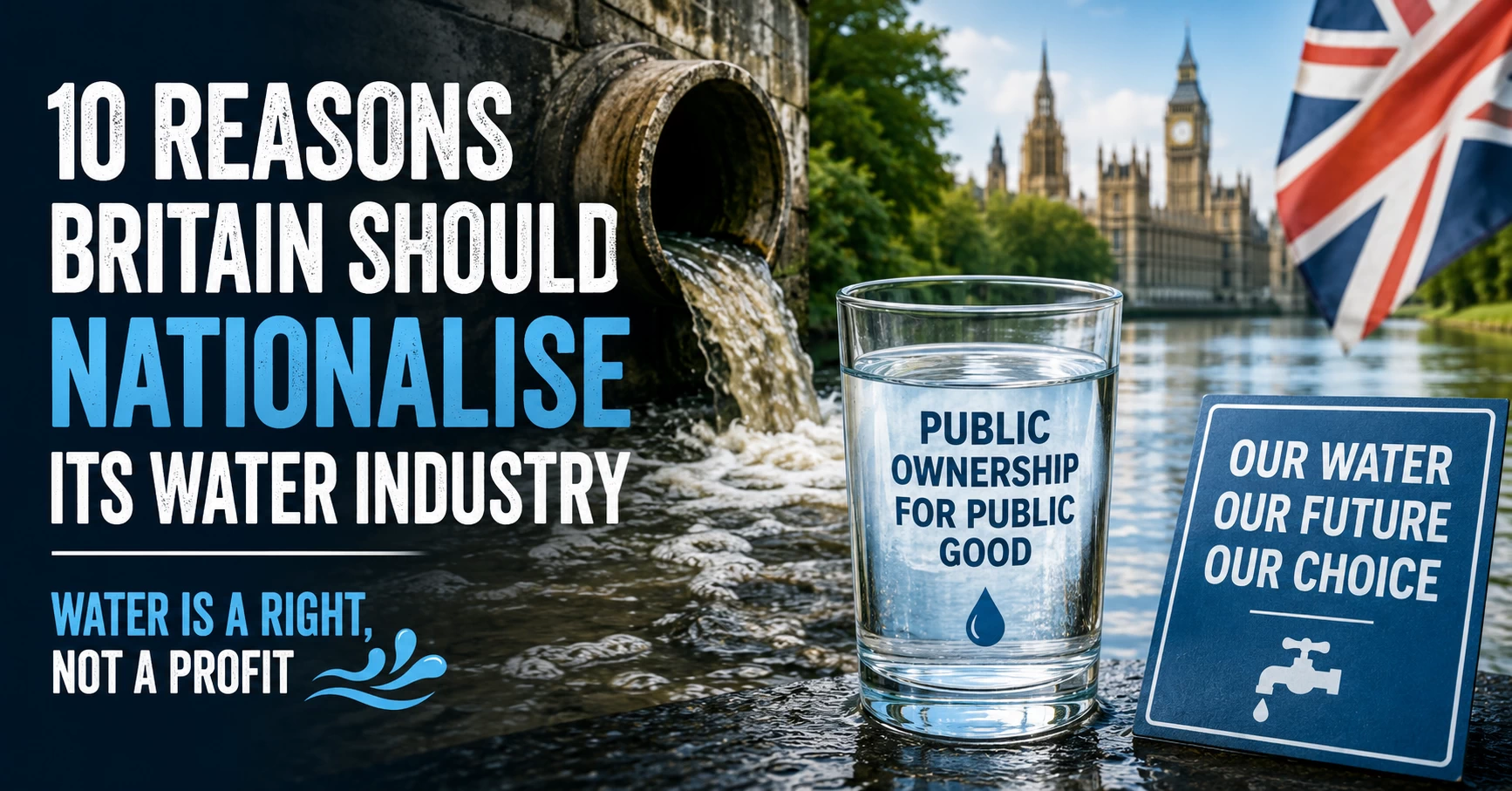

Britain should nationalise the water industry.
That statement would once have been regarded as politically radical. Today it is increasingly viewed as common sense by many voters, environmental groups and economists.
Almost four decades after privatisation, England and Wales have some of Europe’s highest water bills, repeated sewage pollution scandals, ageing infrastructure and companies carrying billions of pounds of debt.
Supporters of privatisation promised competition, investment and efficiency. Instead, many customers believe they have received higher bills, deteriorating public confidence and rivers polluted by sewage.
If a private model no longer delivers for the public, Parliament has every right to ask whether public ownership would better serve the national interest.
This is not the first time The News Today has examined the failures of the sector. Our earlier investigation, Water Privatisation Is Broken, explored how decades of underinvestment have contributed to today’s crisis.
Why Nationalising the Water Industry Makes Economic Sense
Water is not a normal commercial product.
Every household depends on it every day, yet nobody can choose their supplier. Unlike electricity or broadband, there is no meaningful competition. Each regional company operates as a monopoly.
Where markets cannot function, public ownership deserves serious consideration.
1. Water Is a Natural Monopoly
Competition is the foundation of capitalism.
Water has none.
Customers cannot switch suppliers because only one company owns the pipes serving each home.
When competition is impossible, regulation can only achieve so much.
2. Public Ownership Would Put Investment Before Dividends
Since privatisation, water companies have paid billions of pounds to shareholders while essential infrastructure has continued to age.
Leaking pipes, insufficient reservoir capacity and outdated sewage systems now require enormous investment.
Under public ownership, any operating surplus could be reinvested directly into improving services rather than paying dividends.
3. Nationalising the Water Industry Could Help Protect Rivers
Public anger over sewage pollution has grown dramatically.
Water companies have faced repeated criticism and regulatory action following illegal or excessive sewage discharges into rivers and coastal waters.
Customers increasingly ask why companies paying executive bonuses have failed to protect the environment.
Protecting rivers should come before protecting shareholder returns.
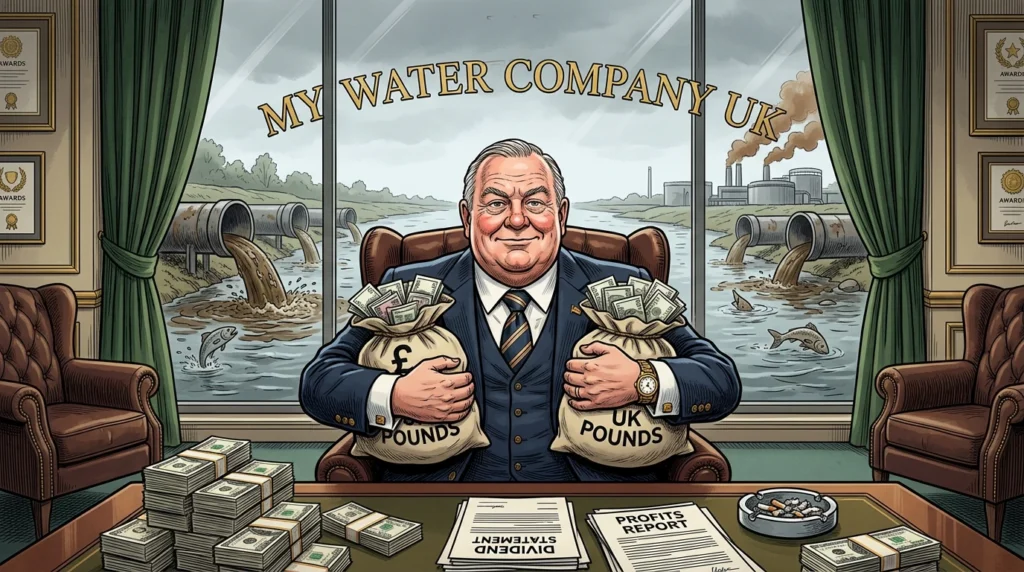

4. Debt Has Become Part of the Business Model
Many water companies have accumulated substantial borrowing while continuing to distribute dividends.
Critics argue that customers ultimately pay twice:
- through rising bills
- through servicing corporate debt.
A publicly owned system could instead borrow at lower government rates while focusing investment on infrastructure.
5. Water Is Critical National Infrastructure
Governments already accept that some services are simply too important to fail.
The armed forces.
The police.
The NHS.
National electricity transmission.
Water belongs in the same category.
Its primary purpose should be public service rather than shareholder profit.
6. Every Pound Could Benefit Customers
Private companies must reward investors.
A publicly owned operator could instead use surpluses to:
- replace ageing pipes
- reduce leakage
- build new reservoirs
- modernise treatment works
- improve drought resilience
- keep bills lower over time.
7. Public Trust Has Been Lost
Opinion polling consistently shows significant support for returning water to public ownership.
Many customers feel they are paying more while receiving less.
Rebuilding trust requires greater accountability than many believe the current model can provide.
8. Scotland Demonstrates Another Model
Scotland retained publicly owned water through Scottish Water.
While no system is perfect, it demonstrates that public ownership remains a practical alternative within the United Kingdom.
The debate is therefore not between theory and reality—it is between two different models already operating within Britain.
9. Why Shareholders May Deserve Little Compensation
This is undoubtedly the most controversial issue.
Shareholders generally expect compensation when governments acquire private assets.
However, investing in any company carries commercial risk.
Many water companies have experienced years of underinvestment, rising debt and regulatory failures.
Where businesses have effectively failed to fulfil their public obligations, Parliament could reasonably argue that compensation should reflect the companies’ actual financial condition rather than historic market valuations.
Taxpayers should not necessarily be expected to compensate investors for risks those investors willingly accepted.
10. Water Should Serve Citizens First
Water is essential for life.
Nobody can live without it.
Nobody can choose another supplier.
Because of its unique importance, many believe the purpose of the water industry should be to provide reliable, affordable and environmentally responsible services—not maximise returns for financial investors.
Conclusion
Nationalising the water industry would not solve every problem overnight.
Britain would still require decades of investment to modernise ageing infrastructure.
However, returning water to public ownership would allow every pound collected from customers to be focused on improving services rather than rewarding shareholders.
Whether compensation should be generous, limited or minimal is ultimately a matter for Parliament.
But where companies have accumulated heavy debts, presided over environmental failures and relied upon customers paying ever higher bills, many will ask whether taxpayers should really be expected to reward those who owned them.
For an increasing number of voters, the answer is no.
Frequently Asked Questions
Would nationalising the water industry cost billions?
It depends on the legislation adopted by Parliament and the financial condition of each company. Compensation need not necessarily reflect historic market values.
Does Scotland have publicly owned water?
Yes. Scottish Water remains publicly owned and provides an alternative model to that used in England and Wales.
Why is water considered a natural monopoly?
Because households cannot choose between competing pipe networks. Building duplicate water infrastructure would be impractical and prohibitively expensive.
Would bills automatically fall?
Not immediately. However, supporters argue that eliminating shareholder dividends could allow more money to be invested in infrastructure and help limit future bill increases.
Suggested Internal Links
Link naturally within the article to:
- Water Privatisation Is Broken
- 1 in 3 Children in the UK Are Living in Poverty
- Brexit’s Winners and Losers
- Andy Burnham Could Help Renew British Politics
External References
- UK Government – Water (Special Measures) Act 2025
- House of Commons Library – Water Industry Regulation
- National Audit Office – Economic Regulation of the Water Sector
- Ofwat – Enforcement and performance reports
- Environment Agency – Water quality and sewage discharge data
Call to Action
Should Britain’s water industry return to public ownership?
Join the debate in the comments, share this article with others, and help keep independent journalism alive by following TheNewsToday.eu.



▶ Listen to this article Audio narration from The News Today.eu Your browser does not support audio playback. For more than four
More▶ Listen to this article Audio narration from The News Today.eu Your browser does not support audio playback. A Black barrister arriving
MoreFor thousands of years, humanity has divided itself into tribes. By nationality. By race. By language. By class. By territory. But perhaps
More▶ Listen to this article Audio narration from The News Today.eu Your browser does not support audio playback. Every species has its
MoreFor most of my adult life I have been a Labour voter and a member of the Labour Party. That wasn’t simply
More▶ Listen to this article Audio narration from The News Today.eu Your browser does not support audio playback. 1 Is Racism Becoming
MoreIntroduction For much of the past four decades, Britain’s economy has been built around the idea that if those at the top
MoreWhen Andy Burnham walked into Downing Street, he inherited more than an economy under pressure, overstretched public services and a divided country.
MoreWealth Inequality Has Widened Since 2010, Britain has seen the number of billionaires rise from around 50 to well over 150, while
More▶ Listen to this article Audio narration from The News Today.eu Your browser does not support audio playback. Will Andy Burnham’s Latest
More